A long, long time ago
In the summer of '74
Hank Aaron broke that home-run record.
And I know that if he were here
He'd consider baseball with a tear
And hope some dignity would be restored.
But February, pre-season training
Only a few clean players remaining
Bad news from the panel
Blaring on every channel
It put everyone in a bad mood
When they read about those doped-up dudes,
And managers hid under their beds and cried
The day the baseball died.
So bye, bye, Miss American Pie
Drove my Chevy up to Fenway but the Fenway was dry
And them good ol' boys shooting steroids into their thighs,
Singing, "This will help me get some RBIs."
Did you read the Mitchell report
And would you have faith in the future of sport,
If ESPN tells you so? Now do they believe in taking drugs,
Or do they sit there looking smug,
And can they get out of this hole that they've dug?
Well they know that you guys took those 'roids,
And now you know you can't avoid
The fact it's all over the news,
Oh, you guys are totally screw-eeed
The Orioles were a team of last-place schmucks,
Thought bulking up would help them not suck,
But too bad now: they're out of luck
On the day the baseball died.
And Mitchell's singing,
Bye, bye, Miss American Pie,
Drove my Chevy up to Fenway but the Fenway was dry
And them good ol' boys shooting steroids into their thighs,
Singing, "This will help me get some RBIs."
Now for several years baseball's gone downhill
Hard to break records or give the fans a thrill
But that’s not how it used to be.
When Babe Ruth hit that 714,
No one thought drug use would be routine
And guys would get caught with it in their pee.
Oh, and the commission was looking down,
Probing locker rooms with a frown.
And discovered the whole scam;
The verdict was a grand slam.
And while Selig read "Game of Shadows,"
Roger Clemens was warming up to throw,
But his career was dealt a blow
The day the baseball died.
Thursday, December 13, 2007
Thursday, November 29, 2007
Greetings, Citizens
- Rilo Kiley's lead guitarist, Blake Sennett, also creator and front man of The Elected, was a child actor, playing the roles of Ronnie Pinsky on Salute Your Shorts and Joseph "Joey the Rat" Epstein on Boy Meets World. He and Jenny Lewis dated for about four years while playing together as Rilo Kiley, but despite each musician's side projects, they have released two albums together since breaking up.
- For its first six years, animated talk show Space Ghost Coast to Coast featured an opening theme called "Hit Single" by guitarist Sonny Sharrock and drummer Lance Carter. Seasons four, five and six had a closing theme by surf-rock group Man or Astro-man?. Many musicians were guests on SGC2C, including Björk, Radiohead's Thom Yorke, "Weird Al" Yankovic, Alice Cooper and Pavement (whom Space Ghost introduces as The Beatles).
- Review site Pitchfork gave music a 6.8.
Wednesday, November 28, 2007
Collection of Sundry Music Facts
- The song "One Way Out" was originally written and recorded by the King of the Slide Guitar, Elmore James, in 1960-61. Blues man Sonny Boy Williamson II, who is often credited with writing the song, released another version of it for Chess Records later in 1961. It was then popularized by The Allman Brothers Band and released as a live track on 1972's Eat a Peach.
- Folk singer/activist Pete Seeger, most well-known for writing "If I Had a Hammer" and "Turn, Turn, Turn!", was a banjo aficionado. In 1948, Seeger wrote the first version of How to Play the Five-String Banjo. He also invented the Long Neck or Seeger banjo, which is three frets longer than a typical banjo, and slightly longer than a bass guitar at 25 frets, and is tuned a minor third lower than the normal 5-string banjo.
- Metal band Quiet Riot's cover of the 1973 Slade hit "Cum On Feel the Noize" shot to No. 5 on the Billboard chart in late 1983 and spent two weeks there, making it the first heavy metal song to make the top 5 on Billboard's Hot 100 singles chart. Subsequently, the group's album Metal Health was the first American heavy metal debut album to reach No. 1 in the United States. It was No. 1 on Nov. 26, 1983, making Quiet Riot the first heavy metal band to have a top 5 hit and a No. 1 album the same week.
- Music collective Elephant 6 Recording Company was founded in 1991 by Robert Schneider, who went on to form The Apples in Stereo; Bill Doss and Will Cullen Hart of The Olivia Tremor Control; and Jeff Mangum of Neutral Milk Hotel. The Apples in Stereo's 1993 Tidal Wave 7" EP was the first E6 release, and though the label has since disbanded, the Apples' 2007 New Magnetic Wonder also bears the E6 logo.
Thursday, November 15, 2007
The Music Re-education Project
Recently, I was in my car, scanning radio stations in the D.C. area, looking for anything at all that was 1) in English and 2) didn't necessitate the bleeping of any words starting with "n," and I came across a classic rock station playing "A Day in the Life." Good enough, I thought. I performed that song with my high school marching band, so I'm even more familiar with it than I am with other Beatles songs. Out of habit I start to sing along. My boyfriend, who was in the passenger seat, asked, "What's this song called?" I told him. He said, "This is the Beatles? I've never heard it."
Yes, he's never heard "A Day in the Life." Meanwhile, my own mother tells me regularly that she knows how many holes it takes to fill the Albert Hall. I tried not to make a big deal out of it, since I know he's not the biggest music aficionado. But seriously? How does anyone who has ever owned a radio, or had parents with a record player, not know one of the most famous songs from one of the most famous rock albums of all time? I thought it was bad enough when my best friend said he'd never heard "Stairway to Heaven." (He immediately regretted the admission, since my mom was within earshot.)
Do I just hang out with musically challenged people? Are they in the minority? Or does my generation truly not have any concept of musical history? It got me thinking about my own musical education, and I realized the only real source I had growing up was my parents, and they might be disproportionately obsessed with their own generation's culture. My dad can tell you what guitar Eric Clapton is playing on any given song with any band he ever played with, and I've never seen him as proud of me as he was when I snagged his Allman Brothers t-shirt and started wearing it to school.
So maybe I got lucky. But what about everyone else? My American history class ran out of time at the end of the semester, so we didn't even get to the Cuban Missile Crisis, let alone Woodstock. Even playing trumpet in band, I was never taught about Miles Davis or Louis Armstrong. Our teacher made us attend a performance by Maynard Ferguson, but at the time I had no appreciation for it, probably because I had no background.
Having in the past few years discovered a great interest in indie music, I started writing about it. I got a CD few reviews in the newspaper where I was a copy editor, and last month I started writing about music for a national news outlet. But an appreciation music is not an understanding of music. A foundation in the Beatles and Ten Years After is a good start, but I had never heard a Smiths song until a few months ago. I have huge gaps even in my own musical education, and my writing suffers because of it. You have to have points of reference -- it's like hearing a cover of a song before the original.
So I've decided to remedy that. I've been looking for something to stimulate my brain since college, and this is it. I'll do short studies of prominent people and events in American culture as related to music, and I hope by the end to education other people as well as myself. As I'll be doing this mostly as a way to pass the time at work, I'll spend a lot of time with Wikipedia, but I'll supplement that information with whatever else I can find -- books, magazines, mp3s. Maybe I'll even learn to play guitar. Thanks for the inspiration, Jack Black.
Monday, September 24, 2007
Rogue Wave and the Art of Ambiguity
 Though a band with only four members, Rogue Wave always manages to sound like it's backed by an entire symphony (think Band of Horses without the borderline-cliche crescendos). Instead of providing just a bass line and a rhythm, the ins and outs of the instrumental melodies are their own lyrics, a rich context to the ones sung by frontman and vocalist Zack Rogue.
It's not the most memorable track on its newest album, "Asleep at Heaven's Gate," but "Like I Needed" still commands the ear. Screechy guitars and heartfelt "Oooh oohs" supply an intricate background for almost nonsensical lyrics -- "Camel toe with water fiction / Cannot go with Finn" -- though they do take an enigmatically geeky turn with "These aren't the droids you're looking for," an oft-quoted line from 1977's "Star Wars." Like a lot of good poems, the listener can interpret it for himself: If you want the song to be about literature, "Finn" (all the lyrics in the booklet are lowercase, so I'm assuming it's capitalized) could be Huckleberry Finn (or about the Netherlands, a person from Finland; or about a party you ought to leave, a Mickey Finn).
And in the wistful chorus, is Rogue singing "Like I needed" as in a sneering "As if I needed that" or a grateful "That's exactly what I needed"? It could go either way. It's likely any vantage point can make you see whatever you want: It can be either a lament or a celebration, a Ginsberg-esque social commentary or the soundtrack for a sci-fi marathon.
Friday, July 13, 2007
Smashing Pumpkins -- "Zeitgeist"
 Half of the original Smashing Pumpkins reunite for "Zeitgeist," an earnest but clumsy attempt to recapture the distinctive sound that catapulted the group to mega-fame in the 1990s. On the first album to bear the Pumpkins' name since 2000, vocalist/guitarist Billy Corgan and drummer Jimmy Chamberlin show no signs of atrophy, but no signs of any evolution, either. The uniformly guitar-heavy tracks rarely deviate from a traditional metal/punk-rock formula and display virtually none of the charm or depth of the '90s hits. There's an attempt at political commentary -- Corgan in "United States" croons of wanting to "fight a revolution," but, like the album, he isn't quite convincing anyone. While the Pumpkins may have been original the first time around, this time they sound like they're covering themselves.
Sunday, June 3, 2007
"Once"
 Glen Hansard and Marketa Irglova may not be established actors, but with "Once," they have made one of the best movies I've ever seen. It's one of those "the beauty is in the simplicity" films -- Guy meets Girl; they're afraid to get too close but they're both lonely; they share a common love of music; they slowly form their relationship while exploring various scenes in Ireland.
No twists, surprises or car chases -- not even a kiss, dramatized or otherwise. Just a beautifully directed, beautifully shot view of a defining few days in these people's lives. The music isn't forced or dull -- the camera often stays on one person's face for upward of a couple minutes, showing far more character development than 10 minutes of dialog would provide.
Oh, and did I mention Ireland is absolutely gorgeous? I was planning a trip there in a year or two, but I may have to accelerate those plans. Especially if that means I may meet a down-on-his-luck street musician and record an album with him.
In short, SEE THIS MOVIE. Then listen to The Frames' "The Cost" and Hansard & Irglova's "The Swell Season" once a week for the rest of your life.
Tuesday, May 1, 2007
Baskervilles
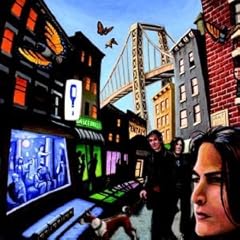 I picked up the Baskervilles' self-titled record a couple of years ago because I was intrigued by the group's impossibly upbeat, New York indie-pop sound (check out "Opening on Thompson"); plus, since I had never been to New York, the Baskervilles opened up what I would forever hold in my mind as the essence of the city. Later, when I did finally visit NYC, I took a picture of the Century 21 across from Ground Zero (I'd never heard of the store before) and hummed "Free Show in Battery Park" as I stood in line at the Circle Line Ferry.
Anyway, the Baskervilles are still awesome, and while they rarely, if ever, venture out of NYC, you can check out their new project at their website. Twilight 14 gives you a new single each month, with a sleeve designed by a "modern artist." No one ever said New York musicians didn't have no culture. Now if only I could make it to the Big Apple for the Popfest...
Sunday, April 22, 2007
Fountains of Wayne
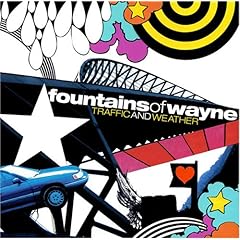 I gotta say, when I heard "Stacy's Mom" for the first time, I thought, these are a bunch of Blink-182 wannabes, thinking they're way cooler than they are. Now, though, I admonish me from back then, especially since I'm a huge fan of musical farce (my favorite band of all times is They Might Be Giants, and I saw Harry and the Potters do a live show) and should have known better. "Stacy's Mom" is not the height of Fountain of Wayne's musical talent, but it's a damn catchy song, and the band was probably as surprised as anyone when it catapulted them into the mainstream.
"Traffic and Weather," FOW's latest release, is not the group's best release, but it's nothing to complain about. The main criticism people may have is that there's no standout track or one that screams "single," but I'm coming to realize that an album's very composition, not the tracks that make it up, is what makes it great. (Just ask a group like Sparklehorse.) "Traffic" is an album about journeys, about the search both physical and psychological, for something and for reasons you can't quite understand. I love albums with themes, mostly because I'm an English major and am inherently attracted to poetry and hidden meanings and especially trying to figure out someone's attitude through the appearance of his art. These songs seem to say, "Life's about travel, and something traveling sucks and is really boring and frustrating. But you gotta get from one place to another, and you should enjoy the trip if you can." And of course, as per usual, we get the song about a girl with a two-syllable name -- in this case, "Revolving Dora," about a DMV worker. As far the actual sound, I could throw out words like "catchy" and "infectious" and "pop rock" and "lyrics," but, come on, it's Fountains of Wayne. I can't imagine they could write a bad song.
Wednesday, April 18, 2007
"When ideas fail, words come in very handy." - Goethe
It's not as if I've never thought about tragedy. My memories of Columbine (in the 8th grade) and 9/11 (as a junior in high school) are crystal clear, and those were terrible and shocking times. But nothing like the recent events at Virginia Tech has ever had this effect on my sensibilities. The Columbine killers were batshit insane, clearly -- citing Marilyn Manson, violent video games, the whole bit, giving overprotective parents and conservative assholes more fodder for banning anything with the minutest bit of potential for causing emotional distress or inciting violent tendencies in young people. The Columbine killers worked together, a deranged duo on par with the craziest of Charles Mansons, Jeffrey Dahmers and suicide bombers in parts of world I can't even fathom living in right now.
And 9/11, that was a time of horror we shared as a nation, completely bewildered at the insanity of people who lived far away and worshiped in a way absolutely foreign to our own; people who gave no thought to the lives they snatched away, so utterly set upon their own sick, twisted, brainwashed ways that they transformed the way our nation carries on even more than five years later. I watched, like every other American, for days and days, cable news and local news and printed news, trying in vain to learn, trying to make sense, trying to forget the pain.
But this Cho kid, he grates my mind and heart in such a way that is so awfully, so nauseatingly familiar. I went to a small school on the East Coast, in a state that shares a border with Virginia. I was an English major with a creative writing minor. I took fiction classes and poetry classes and playwriting classes. I knew and even associated with the weirdest of people, literature students who wrote about situations and characters that impressed and even intimidated me, though mostly because the creativity and thought in these works were beyond my own. Being an English major pushed me to take my own analysis, my own creativity to levels I never knew existed. There is something about a community of writers that is like no other interaction or dynamic in the world, and daily I try to reconnect, if only in my mind, to that world in order to retain that writer's high, that intellectual plateau.
I could have known Cho. He could have been that silent kid in poetry class who took half-joking, half-disturbing jabs at certain members of the college community in his biweekly creative writing submissions. He could have lived in the dorm down the street, crossing the street the same time I did to get to a 10:30 class. I could have tripped over his chair in the dining hall; I could have rolled my eyes and made snarky, completely unfounded comments about him with my friends because that's what college girls do.
My story is exactly like any other college student's story: delightfully average. I got drunk; I danced; I cried; I stayed up all night and failed tests; I stressed over nothing; I walked downtown and ate egg sandwiches at 3 in the morning in the rain.
Now, here's where it all breaks down. There were people I disliked in college; there were people I met in college that will be my best friends forever. Where, in all of this, does a boy decide to buy a gun? When does he decide to commit the most heinous of acts and take another person's life? When does it all end for him? What, exactly, are this thoughts the morning of April 16? What does he feel when he pulls the trigger, and then decides to keep pulling it? These are questions I will never know the answer to, because my mind cannot comprehend a mind such as his. There is an abrupt and sudden disconnect between the deepest, most secret part of my brain where my darkest thoughts reside, and the point where I can comprehend even with the most open and objective mind how the entire godforsaken world a person can purchase a gun and decide the only way out of his problems is to take 32 lives.
If I were a religious person, this would shake the foundation of my faith. But instead, I'm left with such a gaping hole in logic that I'm honestly wondering how the universe can still function. How can someone like this Cho kid simply be allowed? How can such an anomaly, such a fundamentally fucked-up person not be recognized, be fixed, be done with? How could any god, any world, any universe allow this? Tell me why any parent who sends his or her child off to college should have to get a phone call saying that child will never be coming home. Tell me why the students at that school should have to struggle for the rest of their lives with what happened that morning.
Tell me how one person, one mind, can cause the foundations of worlds to crumble.
And 9/11, that was a time of horror we shared as a nation, completely bewildered at the insanity of people who lived far away and worshiped in a way absolutely foreign to our own; people who gave no thought to the lives they snatched away, so utterly set upon their own sick, twisted, brainwashed ways that they transformed the way our nation carries on even more than five years later. I watched, like every other American, for days and days, cable news and local news and printed news, trying in vain to learn, trying to make sense, trying to forget the pain.
But this Cho kid, he grates my mind and heart in such a way that is so awfully, so nauseatingly familiar. I went to a small school on the East Coast, in a state that shares a border with Virginia. I was an English major with a creative writing minor. I took fiction classes and poetry classes and playwriting classes. I knew and even associated with the weirdest of people, literature students who wrote about situations and characters that impressed and even intimidated me, though mostly because the creativity and thought in these works were beyond my own. Being an English major pushed me to take my own analysis, my own creativity to levels I never knew existed. There is something about a community of writers that is like no other interaction or dynamic in the world, and daily I try to reconnect, if only in my mind, to that world in order to retain that writer's high, that intellectual plateau.
I could have known Cho. He could have been that silent kid in poetry class who took half-joking, half-disturbing jabs at certain members of the college community in his biweekly creative writing submissions. He could have lived in the dorm down the street, crossing the street the same time I did to get to a 10:30 class. I could have tripped over his chair in the dining hall; I could have rolled my eyes and made snarky, completely unfounded comments about him with my friends because that's what college girls do.
My story is exactly like any other college student's story: delightfully average. I got drunk; I danced; I cried; I stayed up all night and failed tests; I stressed over nothing; I walked downtown and ate egg sandwiches at 3 in the morning in the rain.
Now, here's where it all breaks down. There were people I disliked in college; there were people I met in college that will be my best friends forever. Where, in all of this, does a boy decide to buy a gun? When does he decide to commit the most heinous of acts and take another person's life? When does it all end for him? What, exactly, are this thoughts the morning of April 16? What does he feel when he pulls the trigger, and then decides to keep pulling it? These are questions I will never know the answer to, because my mind cannot comprehend a mind such as his. There is an abrupt and sudden disconnect between the deepest, most secret part of my brain where my darkest thoughts reside, and the point where I can comprehend even with the most open and objective mind how the entire godforsaken world a person can purchase a gun and decide the only way out of his problems is to take 32 lives.
If I were a religious person, this would shake the foundation of my faith. But instead, I'm left with such a gaping hole in logic that I'm honestly wondering how the universe can still function. How can someone like this Cho kid simply be allowed? How can such an anomaly, such a fundamentally fucked-up person not be recognized, be fixed, be done with? How could any god, any world, any universe allow this? Tell me why any parent who sends his or her child off to college should have to get a phone call saying that child will never be coming home. Tell me why the students at that school should have to struggle for the rest of their lives with what happened that morning.
Tell me how one person, one mind, can cause the foundations of worlds to crumble.

Friday, April 13, 2007
Gal Friday
Today in music*:
* Does not necessary indicate "new" music, as in "available to the average person not on or who knows someone on a promo-copy mailing list" -- "new" to me is simply "hey, interesting stuff! Am I the only one who didn't know about this?"
1. Mika -- "Life in Cartoon Motion" (2007)
I remember skimming Amazon for upcoming releases and being drawn to Mika's album the same reason I'm drawn to any album on the 50+ pages of upcoming releases on Amazon: the flippin' awesome cover art.
* Does not necessary indicate "new" music, as in "available to the average person not on or who knows someone on a promo-copy mailing list" -- "new" to me is simply "hey, interesting stuff! Am I the only one who didn't know about this?"
1. Mika -- "Life in Cartoon Motion" (2007)
I remember skimming Amazon for upcoming releases and being drawn to Mika's album the same reason I'm drawn to any album on the 50+ pages of upcoming releases on Amazon: the flippin' awesome cover art.

The mix of "Yellow Submarine" and "Reading Rainbow" screamed at me to check it out, and boy was I glad I did. I got my first listen to "Grace Kelly" on his MySpace, and I rejoiced a few weeks later when I found the mp3 on a blog. Somewhere thereafter I found out his song "Love Today" was featured in a Verizon commercial (can't find it on YouTube... try this promo for "Grace Kelly" instead), and I got to have an "I called it!" moment (the same moment I had when I heard The Fratellis on that iPod commercial after having been a fan for about three months. I love my iPod, and my MacBook, but I hate Apple for being so damn good at marketing "cool.")
So, having worked in the media for a while and being able to get my hands on free music basically whenever I wanted, I haven't quite gotten back into the habit of buying music. I mean, I want musicians to know I appreciate their work, and I want them to be able to eat, but ... well, my excuse for now is student loans. So I picked up "Life in Cartoon Motion" from a friend, and while "Grace Kelly" is clearly the standout track as least as far as memorability, it's a solid debut album, and Mika (aka Michael Holbrook Penniman, of London by way of Lebanon) has a gorgeous voice with great range. He seems to have the personality and creativity to back up his musical talent, plus all the airplay he's gotten on TV and movie trailers, so unless this album is a total fluke, I don't think he'll be going away anytime soon.
2. The Dears -- Gang of Losers (2006)
I've been a Dears fan for a few months now. I interned at NPR, which was my first exposure to the wonderful world of free music goodness, plus I got to write about music, too, and the Dears were one of my projects.

I associate them with Midlake, since I got hooked on both groups at about the same time, but the Dears have a much more endearing sound, an ethereal but still very solid "please love us" quality that you can't help but tapping your foot to. (Not to dis Midlake -- more on them later.) I've found I can use the phrase "There goes my outfit" in a myriad of ways: when someone fucks my shit up and there's nothing I can do because it's usually my boss; when I'm late for something and the elevator in my apartment stops at least seven times before I get down to the lobby; and when my hamster pees on my jeans and I have to change. Here's the video for "Ticket to Immortality."
3. The Good, The Bad & The Queen -- "Live from SoHo" (2007)
Three cheers for Damon Albarn. The man behind Blur and The Gorillaz finds somewhere in his giant musical brain fresh material that is both reminiscent of the best of the rock part of the Gorillaz and some new/psychedelic/orchestral/guitar-laced crooning that just blows my mind.
 "Herculean" isn't my favorite track on the full-length album (self-titled: check it out; it's awesome. As is the video for "Kingdom of Doom."), but it's by far my favorite on "Live from SoHo," an iTunes-exclusive EP of songs recorded at a rare U.S. performance.
*****
Some words on words
You've heard by now that writer Kurt Vonnegut died Wednesday, April 11 at the age of 84. I had the great privilege to see Mr. Vonnegut give a lecture in 2000 in Kansas City -- the thing that sticks out most in my mind is some baby crying continuously throughout, and KV breaking his spiel for a second and yelling, "Would someone shut that kid up?"
I went on to read "Slaughterhouse-Five" for my sophomore English class in high school, "Slapstick" while I was supposed to be applying to colleges, and "Cat's Cradle" for a Post-Modern American Fiction class my last year as an English major. I further went on to write a 15-page paper discussing Vonnegut's use of Swiftian satire in "Cat's Cradle." Then I graduated from college and started TiVoing "LOST." Sometimes I worry about the quickly deteriorating state of my life.
From an essay by Douglas Brinkley on Mr. Vonnegut:
(T)hen Vonnegut started coughing, clearing his throat of phlegm, grasping for a half-smoked pack of Pall Malls laying on a coffee table. He quickly lit up. His wheezing ceased. I asked him whether he worried that cigarettes were killing him. "Oh yes," he answered. "I've been smoking Pall Mall unfiltered cigarettes since I was 12 or 14. So I'm going to sue the Brown & Williamson Tobacco Company who manufactures them. And do you know why?" "Lung cancer?" I offered. "No. No. Because I'm 82 years old. The lying bastards! On the package Brown & Williamson promised to kill me. Instead, their cigarettes didn't work. Now I'm forced to suffer leaders with names like Bush and Dick and, up until recently, Colin."
Vonnegut of course made this memorable appearance on "The Daily Show."
Basically, the man functioned as a harbinger of doom for the human race, writing about pain, war and the end of the world, but he also wrote about love, regeneration and the goddamn unquenchable hope for mankind. He had the kind of mind that puts him on the same page as Mark Twain and Jonathan Swift himself. And within a minute of being in the same room with him, you could tell he had a heart of gold. Mr. Vonnegut, you will be missed. Let me join the chorus of Americans as we say: So it goes.
Subscribe to:
Comments (Atom)